

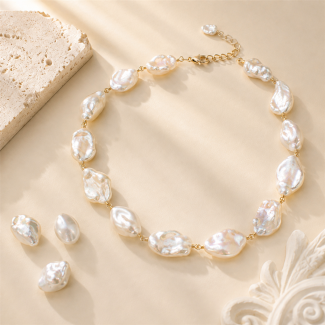
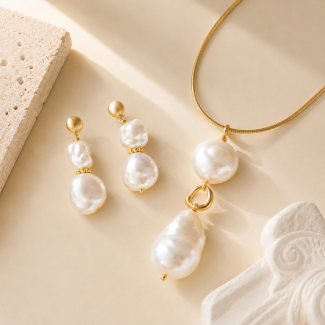
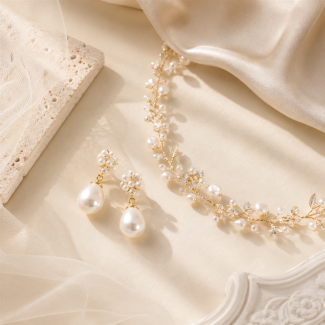
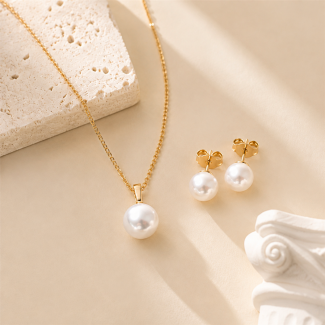
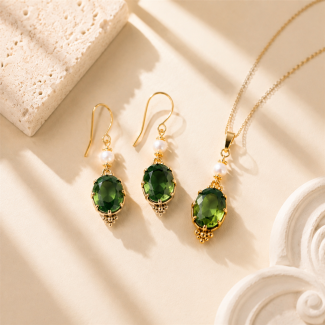
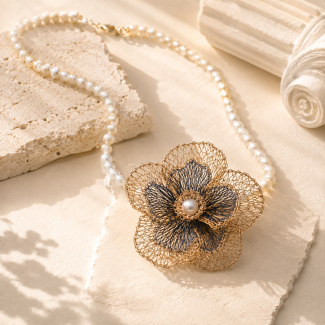
No two pearls are exactly the same because each develops through a biological process inside a mollusk. Tiny differences in the pearl sac, growth conditions and the way nacre accumulates affect shape, surface, colour and lustre.
Even pearls cultivated together can carry individual details. In jewelry, skilled matching creates harmony without erasing those natural differences.
Pearls grow layer by layer
A pearl forms as a mollusk deposits layers of pearl material around a developing centre. In cultured pearls, people initiate the process by inserting mantle tissue and, in some methods, a bead nucleus. The mollusk then does the work of building the pearl.
The pearl sac is not a rigid mould. Its position, the developing pearl’s movement, the mollusk’s biology and environmental conditions can influence how each layer forms. That is why the result cannot be reproduced with machine-like precision.
For the material background, learn more about freshwater pearls.
Shape develops individually
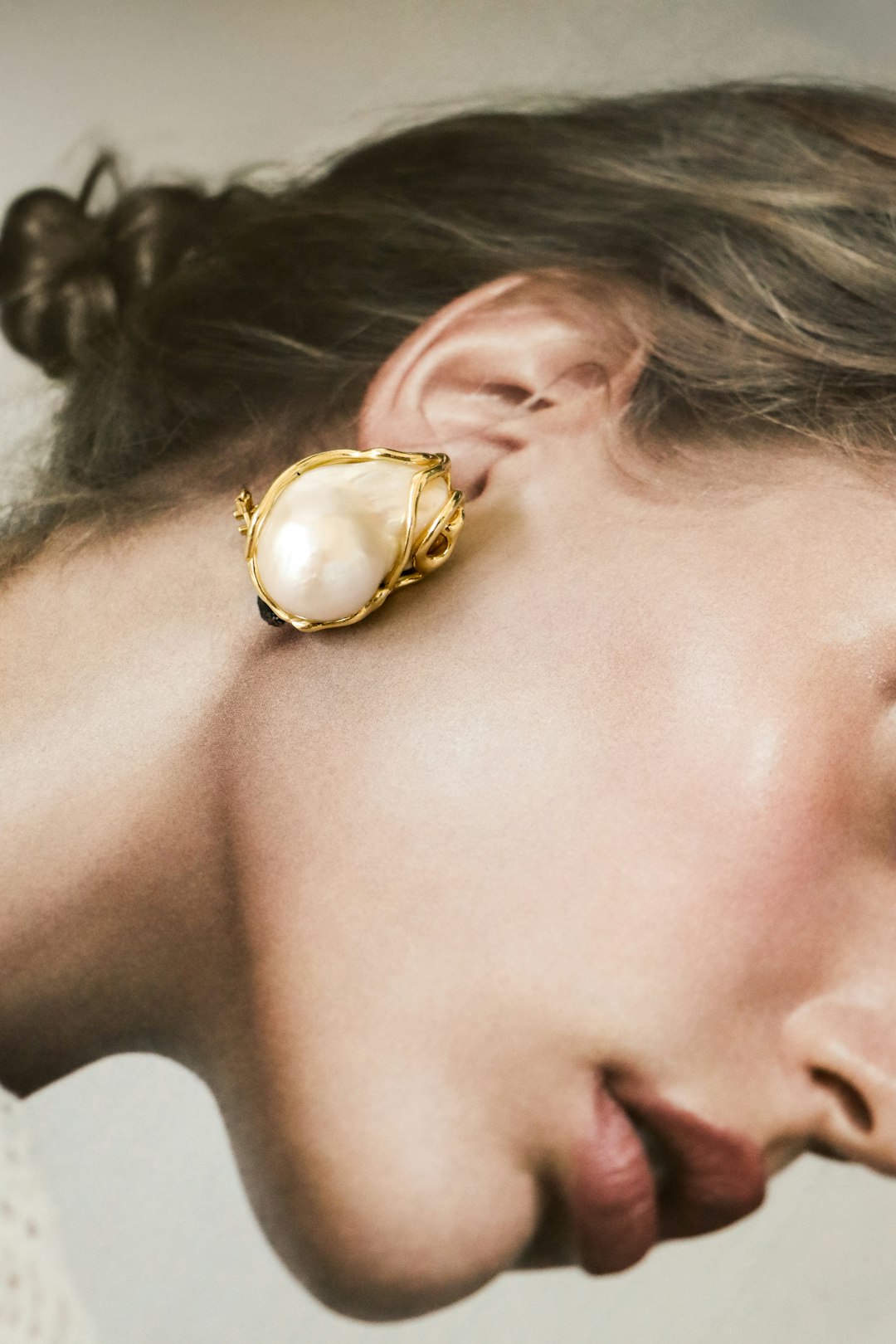
Some pearls grow round or near-round. Others become oval, button-shaped, drop-shaped, semi-baroque or fully baroque. A slight difference in growth can change an outline or create a ridge.
Shape should be described accurately rather than divided into “perfect” and “flawed.” Symmetry can be rare and valuable, but an appealing irregular form may also be prized for its visual character.
Our guide to understanding pearl shapes compares the main categories. For the most organic forms, see what makes baroque pearls distinctive.
Surface features record the growth process
Small dimples, fine ridges, changes in texture and other surface characteristics can develop as a pearl grows. Their number, size, location and severity affect appearance and value.
Minor growth features are not the same as damage. Deep cracks, peeling layers, heavy abrasion, broken drill holes and poor setting work can affect durability. Clear photographs and accurate descriptions should make that distinction visible.
Colour has more than one layer
A pearl’s appearance can include body colour, overtone and orient. Body colour is the dominant colour. Overtones are subtle colours seen over it. Orient is an iridescent, rainbow-like effect that can appear as light interacts with the pearl’s structure.
Small differences in those optical effects mean two pearls labelled “white” may not look identical together. One may appear warmer, cooler, pinker or more silvery in the same light.
Treatments can also change colour. Dyed, coated or otherwise treated pearls should be described appropriately when the treatment affects care, permanence or value.
Lustre varies from pearl to pearl
Lustre is the quality of light reflected from and just beneath the surface. High-lustre pearls show bright, sharp reflections; softer lustre appears more satiny.
Two pearls of the same size and colour can feel different because one has crisper reflections. In a finished pair or strand, makers often prioritise compatible lustre because it creates visual harmony even when shapes are not identical.
What does “matching” really mean?
For classic strands and pairs, matching considers size, shape, colour, lustre, surface and nacre quality. Close matching can require sorting many pearls to find a small group that works together.
Matching does not always mean hiding every difference. In an intentionally organic design, a maker may pair two baroque pearls with different outlines but similar visual weight, colour and lustre. The goal is balance rather than duplication.
How makers work with differences
A maker may use a flatter side to control how a pendant faces, follow a curve with wire, or balance an earring pair by length and visual weight rather than identical outlines.
The distinction is intentional selection. Different pearls should still relate through proportion, colour, lustre and the way the finished piece sits when worn.
Variation, quality and value
More variation does not automatically mean lower quality, and uniqueness alone does not guarantee value. Pearls are evaluated through several connected factors: size, shape, colour, lustre, surface, nacre quality and matching.
A small surface mark may be unobtrusive, while a severe feature can affect durability. A baroque outline can be beautiful, while a dull or damaged surface remains a concern. The complete pearl and the finished construction should be considered together.
What should buyers expect?
- Product photos should show the actual piece or clearly explain representative variation.
- Measurements should be supplied, especially for non-round pearls.
- Pairs should look balanced when worn, even if not identical.
- Material descriptions should distinguish cultured from imitation pearls.
- Returns information is useful when individual variation is significant.
Natural materials can differ from screen to screen and from one piece to another. Clear descriptions help buyers appreciate individuality without receiving an unexpected shape, colour or surface condition.
How to protect each pearl’s surface
Because pearls are soft, store them separately from harder jewelry and wipe them gently after wear. Avoid perfume, hairspray, harsh chemicals, steam and ultrasonic cleaners.
See our guide to caring for your pearls for a complete routine.
Explore related articles on pearl types, shapes and size in our pearl knowledge guide.
Frequently asked questions
Are surface marks always flaws?
No. Minor growth features can be part of a pearl’s natural surface. Their severity, visibility and effect on durability matter. Cracks, peeling and abrasion should be treated separately.
Can pearl earrings still be a matching pair?
Yes. Matching may be very close or intentionally organic. A balanced pair usually shares compatible size, colour, lustre and visual weight.
Are round pearls identical?
No. Even very round pearls can differ in overtone, surface and reflection. Close matching is the result of careful selection.
Will a replacement pearl look exactly like the original?
Usually not. A jeweler can look for a close match in size, shape, colour and lustre, but a replacement may still differ slightly. For earrings, replacing both pearls can sometimes create a more balanced pair.